

If I told you Nigerians have the cheapest freelance rates on Upwork amongst African freelancers, would you believe it? That’s exactly the case: In 2024, Nigerian freelancers charged $163 per task on Upwork, the least in Africa. I shared the data to help you understand the urgency of knowing how to set freelance rates. If you don’t learn it, you’ll undercharge yourself compared to your peers with similar experience and skill sets.
This piece, however, explains different types of freelance rates and the tips to consider before setting one.
Which freelance rates should you use?
Concerning freelance charges, a one-size-fits-all model is a myth. That’s why you need to understand the different ways to set rates as a freelancer in Nigeria.
1. Hourly pricing
If your freelance skill is time-sensitive, the hourly pricing model will definitely work for you. The approach is straightforward—set an hourly price and multiply the time spent on a project by the rate to determine your pay.
The model works best for consultants, designers, customer service representatives, and virtual assistants. The pros and cons of using the hourly pricing mode are listed in the table below:
| Pros | Cons |
| You’ll be compensated for your efforts and time, including revisions, unexpected tasks, and meetings. | Tracking the time spent on work can be skewed. Time-tracking tools may invade your privacy or be ineffective. |
| It’s easy to adjust your rate based on workload and project longevity. | Clients may demand unreasonable turnaround times to cut costs, resulting in excessive workloads. |
| Your income is predictable because you’ll get paid for every hour you work. | Your income is directly tied to the number of hours you work, which limits your earning potential. |
| Perfect for long-term projects with dynamic scopes. | You’ll likely earn less for completing a job faster. |
2. Fixed project-based pricing
This pricing style charges a fixed rate for an entire project. Your rate doesn’t depend on the hours spent on execution alone. Instead, it’s tied to completing pre-agreed deliverables. The approach lets you charge for your time and effort before execution. Project-based pricing is ideal for graphic designers and software engineering-related roles.
The project-based pricing has its pros and cons, and they’re highlighted in the table below:
| Pros | Cons |
| It lets you charge based on time spent and execution skill, increasing your earning power. | You run the risk of doing more work for less pay if the project scope is poorly defined. |
| Regardless of when you complete a project, your payment remains the same. | Determining the accurate cost of a project before execution might be tricky for beginner freelancers, leading to underpricing. |
| You have a clear scope and deliverables, making project execution easier. | Less adaptable to projects with dynamic or unforeseen scopes. |
| Clients are aware of the project cost upfront, making it easier to sift inquiries from serious buyers. |
3. Value-based pricing
In this case, the value you impact is your selling point. It lets you charge clients based on the potential impact of your work on their business. For instance, if your services helped a company achieve millions in sales and revenue, you can base your rate on driving those results.
This pricing approach is ideal for experienced sales and marketing representatives with the nous to implement client-centric, tailored solutions. Learn the benefits and demerits of the value-based pricing model in the table below:
| Benefits | Demerits |
| Increases your earning potential by shifting your income to tangible and measurable outcomes. | If the outcome is improperly defined, your income may suffer as a result. |
| Attracts high-value clients interested in long-term collaborations to grow their business. | It requires strong negotiation skills to justify your pricing and services. |
| Rewards efficiency and expertise. | Suitable for select clients and freelancers. Freelancers with little or no experience are likely to struggle in attracting and retaining high-value clients. |
| Fosters a collaborative atmosphere with clients, therefore increasing client retention and steady income. | You need expert-level knowledge of the industry and the clients you’re dealing with to earn a high income. |
3 tips for setting freelance rates in Nigeria in 2025

It’s great that you understand the different pricing approaches. But the “how” to implement freelance rates is a different game. The tips listed below are factors to consider before setting a freelance rate structure.
1. Your skill level
The freelance marketplace is a “competence wins every day and twice on Sunday” arena. That’s why, in 2024, over 7 in 10 CEOs prioritized hiring freelancers based on competence over degrees.
Clients pay more attention to experience, portfolio, and your ratings (or reviews from previous employers). As a result, your freelance rate card must be benchmarked to match your current skill level and average industry charge. You’re unlikely to outearn your competence level in the freelance industry.
If you’re a beginner writer with limited experience, it’s unrealistic to charge $1,000 for a 500-word piece. I mean, you can do it! But will clients pay? Most likely not. So, examine your skill and benchmark your rates accordingly.
2. The industry you operate in
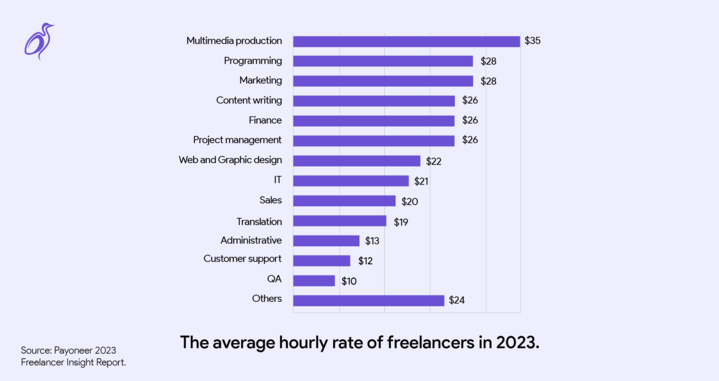
Some niches pay better than others. For example, in 2023, programmers and marketers were paid an average of $28/hour. Before setting your freelance rate card, consider the average pay in the industry you work in. It’ll help you set realistic income goals.
3. Your income goals and tax obligations
How much do you want to make annually from freelancing? Your answer to this rhetorical question will help you quantify the billable work and efforts required.
Additionally, you should consider your tax obligations and incorporate them into your pricing structure. For example, freelancers earning less than ₦1.3 million annually (₦108,000 monthly) are exempt from paying personal income tax under the new Tax Reform Bill in Nigeria, which is scheduled to be enacted in 2026.
Besides tax obligations, a monetary expense to consider is the transaction fees on payment apps you use to receive dollars and other foreign currencies. Deposit fees range from as low as 0.5% of the incoming transaction amount to as high as 2% of the transaction volume.
However, you can avoid exorbitant fees by receiving your international payments on Crane, a blockchain-powered payment platform. We offer discount cards that reduce transaction fees by 25%–100%, enabling you to retain the majority of your earnings.
How freelancers in Nigeria get paid
After setting your freelance rate card, the platform for receiving payment is the immediate agenda you must sort. And this is where Crane comes in. We provide three ways to receive international payments in crypto.
1. Bank Direct: Receive crypto payments in your local account 🏦
Bank Direct is for you if you want a service to receive crypto payments directly into your bank account. Once you activate it on the Crane app, you’ll receive the naira equivalent of your crypto earnings in your bank account in seconds.
2. Request Payroll: Receive payments at the right time 📅
Over 8 in 10 freelancers are paid late. But you don’t have to go through the same experience. Instead, Request Payroll on Crane can help you create an invoice, collect payments as and when due, and record your transactions.
3. Regular Crypto Deposit: Receive international payments into a digital wallet 💼
It allows you to receive payments directly into a digital wallet. This option allows you to hold your payments in cryptocurrency and convert them when needed. Crane doesn’t offer investment opportunities on deposits, but our Auto-Convert feature can help you maximise your crypto earnings.
Here’s how it works: Once you set a rate, preferably a high one, on the Crane app, we’ll automatically convert the crypto to naira once the market value of the cryptocurrency matches the rate you set. By doing this, you can afford to leave your crypto earnings in your Crane digital wallet and convert them when the rate is favourable.
FAQs about freelance rates in Nigeria
How much should a beginner freelance writer charge per hour?
Content writers charged $26 per hour in 2023. So, that’s an industry standard to benchmark your price. Pricing may vary depending on your experience level, location, and project requirements.
Do freelancers charge per word or per hour?
Yes, freelancers typically charge per word or by the hour. Per-word pricing is best suited for content writers and copywriters, while hourly pricing is more suitable for time-sensitive roles, such as customer service personnel, executive assistants, and designers.
How do I market myself as a freelancer?
Do the following to market your freelance business:
- Build a portfolio detailing your best work and projects. Ensure it contains positive client reviews.
- Advertise your work on social media (Facebook, Twitter, LinkedIn) or other relevant platforms where your ideal clients are likely to be found.
- Learn how to create personalised cold emails. Clients don’t always reach out. Cold emails help you pitch your skills to prospective clients. Learn how to create cold emails that convert here 👇🏾


