When I started freelancing six years ago, the payment app to receive dollars from international clients was my second-biggest headache (getting clients was my first worry). I suffered so much that I turned my bad experiences into a newsletter, which you can read here 😀
That’s one reason I’m dedicated to reviewing payment apps like Quidax and Cenoa. Like Crane, both apps are used to receive payments from international clients in Nigeria. But it’s likely you don’t understand their unique services and how best to use them. This piece will enlighten you about how both apps work. Read on!
Quidax vs Cenoa: A comparison table of their services
| Services | Quidax | Cenoa |
| Core offerings | Buy, sell, and trade crypto | Buy, sell, receive, and invest in dollars |
| Target audience | Businesses and crypto enthusiasts. | Freelancers, remote workers, and businesses. |
| Supported currencies | USD, naira, and 50+ cryptocurrencies. | USD, USDC, USDT, naira, and 30+ currencies. |
| Supported channels | Mobile app and web app | Only mobile app |
| Transaction fees | Receiving cryptocurrency is free. Deposit, withdrawal, and crypto swap fees depend on the digital assets. | It charges 0.5% of the transaction volume as a deposit fee. |
| Security | Supports two-factor authentication (2FA). | Wallet backup on the cloud or through magic words. |
| Card services | Not available | Available but it costs $10. |
Cenoa: The hybrid payment app for receiving dollars in Nigeria
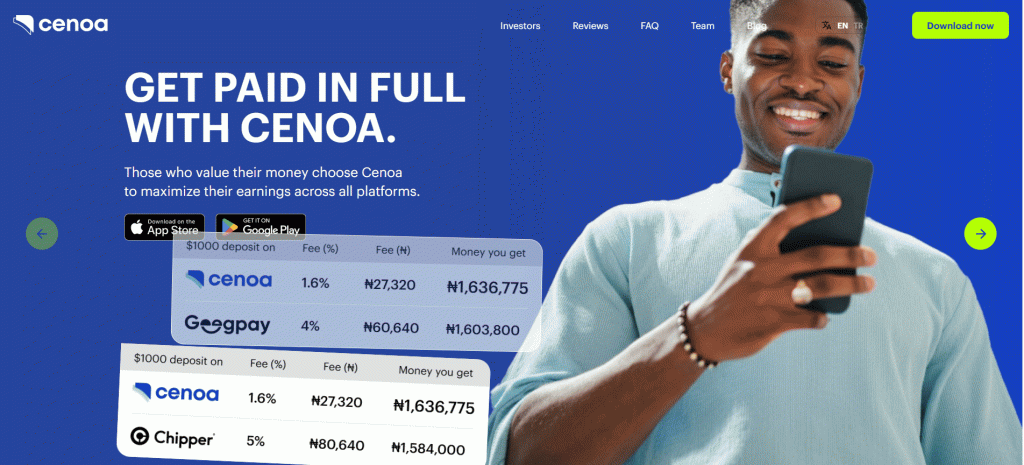
Cenoa is a blend of traditional finance (TradFi) and decentralised finance (DeFi). The payment app lets you buy, sell, and invest in digital dollars (USDC or USDT).
Here’s an overview of their core services:
1. Receive payments
You can receive money through the following means:
- Bank transfers: It provides a US bank account to receive dollar payments through ACH or Wire transfers.
- Payment links to receive money from selected European countries. Payment links are particularly suitable for businesses.
- Stablecoins: You can receive funds in crypto (USDC or USDT).
2. Transfer money
You can transfer money through the following options:
- local bank account.
- 35+ countries, including the US and other European countries.
- Cenoa accounts.
- other crypto users through USDC or USDT.
3. Investment opportunities

Dollar deposits accumulate an annual 5% yield. The interest rate has neither fixed deposit periods nor a lock-in option—your money will grow immediately it hits your account. For example, if you withdraw your money after one day, you’ll receive one day’s portion of the 5% annual interest rate.
Cenoa rates, limits, and card services
Cenoa prides itself on low fees. Cenoa to Cenoa transactions are free, while the deposit fee is 0.5% of the transaction volume for ACH and Wire transfers. This means it costs $3 to send $600 to another US bank account.
Money transfers to domiciliary accounts are done through Over the Counter (OTC), and it costs 0.35% plus a $50 fixed fee for transactions above $6,000.
Card services & fees
It provides a virtual dollar card through RedotPay, which is usable on digital channels like Apple Pay for international payments and bill payments. The card costs $10, and you’ll earn a $5 bonus after activating it.
Transaction limits
There’s no daily limit on transactions. However, the limit per transaction is $4,000, meaning you can receive multiples of $4,000 into your US dollar accounts.
There are instances where you can receive over $4,000. The exceptions are listed below:
- If the funds were sent from an account with your surname. That means the money is from an account you own or from a relative. The limit for this instance is $10k.
- If a company pays you based on a contract, you’ll receive the full payment in a single attempt once you provide the invoice and the binding agreement.
Quidax: The crypto exchange for buying and selling dollars in Nigeria

Quidax is a digital exchange platform for individuals and businesses. It lets individuals buy and sell crypto, including receiving payments in digital currencies, and investment options. Besides, it provides the raw materials to build blockchain-powered services.
It provides the following services:
1. Crypto on-and off-ramp services
It lets you buy digital currencies with crypto, a process known as crypto on-ramp. Similarly, you can convert cryptocurrencies to local currencies, aka crypto off-ramp.
Besides crypto-to-fiat and fiat-to-crypto swapping, it provides crypto-to-crypto swapping and fiat (e.g., naira) to fiat (e.g., USD).
Crypto trading can be done through instant swaps and the order book. The former is an on-the-spot crypto-swapping option for newbies. In contrast, the order book is a real-time trading service for crypto veterans.
2. Dollar savings
You have two methods to invest in dollars—fixed and flexible savings plans.
With a fixed USD savings, you can only withdraw funds after the maturation date. It also guarantees a 10% annual interest. In contrast, you can withdraw funds anytime with the flexible USD savings plans. However, the annual interest rate is 7%. In both plans, $5 is the minimum amount you can save.
3. Business application programming interface (API)
The API provides infrastructure-as-a-service to build crypto products. The API functionalities include:
- Crypto exchanges: buy, sell, trade, and store crypto assets.
- Trading bots (e.g., dollar cost averaging bot): Use automated and trained computer systems for improved profit margin.
- Remittance platforms: Provides the ability to accept crypto payments from customers.
- Utility settlements: buy airtime, data, and other utilities with cryptocurrencies.
- Gift card purchase: buy gift cards with BTC and other cryptocurrencies.
4. Launch specialized tokens
Launch specialized tokens through Quidax Launchpad for business scalability on the blockchain.
Quidax rates, deposit and withdrawal options, and limits
You can fund your wallet through the following options:
- Swapping (e.g., crypto-to-fiat, fiat-to-crypto, and crypto-to-crypto swapping.
- Pay with Rave
- Qdirect (bank transfers)
- Pocket (Abeg)
- Quidax-to-Quidax transfer
The deposit fees
Receiving cryptocurrency on Quidax is free. However, Quidax attaches different rates for sending or swapping crypto, deposits, withdrawals, and fees for using order books.
Funds deposited through direct bank transfer (Qdirect) and the Pocket app cost a flat ₦100. The maximum deposit via Abeg is ₦2M. However, if you’re depositing through Qdirect, the following fees apply:
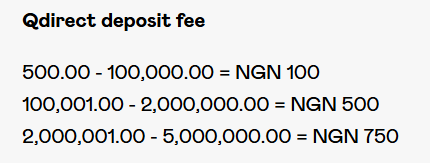
Qdirect deposit fees on Quidax
Naira withdrawal fees
Direct bank transfers attract a flat ₦200 fee Withdrawal via the Pocket app costs ₦100. Qdirect withdrawal fees, however, vary between ₦100 and ₦2,500, depending on the transaction amount, as shown in the screenshot below:
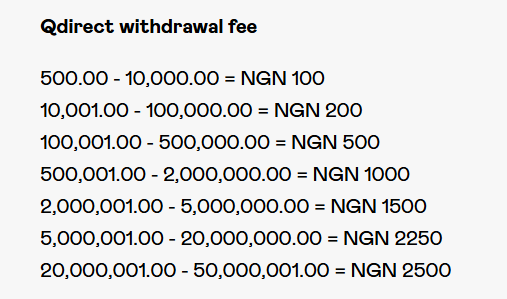
How much does it cost to send and withdraw BTC (or crypto) on Quidax?
Crypto send fees are dynamic depending on blockchain conditions. The crypto send rates, however, vary between 0.002 and 100,000 depending on the digital asset. However, using their emails or phone numbers, you can send crypto to other Quidax users for free.
Here’s the send fee of selected crypto assets on Quidax, as of March 14, 2025.
| Coin name | Send fees | Minimum send amount |
| Ethereum (ETH) | 0.005 | 0.006 |
| Binance Coin (BNB) | 0.001 | 0.002 |
| Dogecoin (DOGE) | 0.0035 | 0.005 |
| Tether (USDT) | 1 | 5 |
| Solana (SOL) | 0.01 | 0.5 |
Bitcoin withdrawal fees vary between 0.0002 and 0.0005 depending on the transaction volume, as shown below:
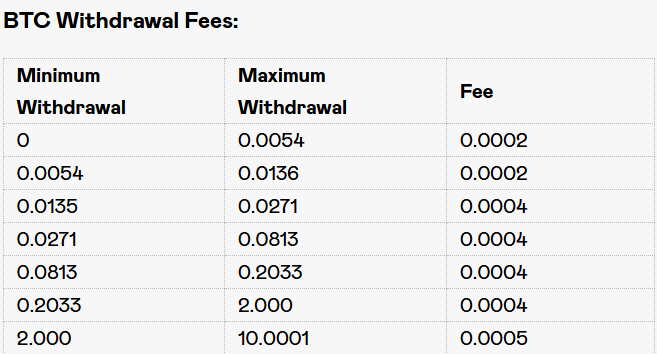
BTC withdrawal fees on Quidax as of March 14, 2025. Source: Quidax
Trade fees
Instant crypto swaps don’t attract any charge. However, maker and taker fees apply to order book trading. The cost for both is 0.1% each.
The maker fee is charged for creating an order (buy or sell) on the order book and having another user complete it. The taker fee applies when you buy or sell using a market order, as it automatically removes liquidity (other traders’ offers) from the order book.
Quidax vs Cenoa: Which app is best for receiving dollars in Nigeria?
Questions regarding the best payment app for remittance rarely have a one-size-fits-all answer, especially when dealing with products that offer similar services. Typically, I encourage prospective users to choose based on their primary use case.
In this case, you should choose Quidax if you tick the following boxes:
- You want a digital wallet to receive and send crypto payments. Quidax provides crypto on-and-off-ramp capabilities to buy digital currencies with local currencies and convert local currencies to crypto.
It also supports 50+ cryptocurrencies on multiple networks, unlike Cenoa, which supports USDC on the Polygon network alone. - You want an all-in-one app for crypto trading and dollar savings. You’ll receive 7-10% annual interest on dollar savings, depending on the plan you chose.
- You want to launch a business on the blockchain. Quidax’s API and specialized tokens provide the raw materials to build blockchain-powered platforms, including collecting/sending money from/to clients.
You should tilt toward Cenoa if you need the following:
- You want a hybrid payment app to receive payments from traditional finance systems (ACH and Wire transfers) and DeFi platforms via stablecoins.
- You want a payment app for low-risk investments. Cenoa offers a 5% annual return on savings. Your money will start growing immediately it enters your wallet. Unlike Quidax, Cenoa interest has no minimum value before it starts accumulating.
- You want a payment app with a digital dollar card for seamless spending on e-channels through Apple Pay.
- You want a payment app with industry-leading rates compared to banks and everyday fintech platforms. For instance, Cenoa charges 0.5% on inflows, while other platforms like Grey and Geegpay charge 0.8%.
- You want to collect bulk orders through payment links, particularly from European countries.
Cenoa vs Quidax vs Crane: How do the payment apps compare?

Think about Crane as a simplified version of Quidax—you can receive cryptocurrencies and convert them to naira but can’t send or swap crypto or invest in dollars. We’re strictly an off-ramp service for receiving crypto payments and converting them to naira.
While Cenoa lets you receive payments in stablecoins (USDC or USDT) through the polygon network, your options are limited to the aforementioned digital assets and one service network.
Crane, on the other hand, lets you receive payments in stablecoins (USDC and USDC) and other cryptocurrencies, such as BNB, BTC, ETH, TRON, and DOGE across multiple networks (e.g., BEP 20, ERC 20, TRC 20, and Ethereum). As a result, Crane gives you more options to receive payments from clients.
Crane cuts the fluff and makes it easy for everyone to receive money. We provide the following services to collect and manage payments:
- Bank Direct: It lets you collect crypto payments directly into your bank. All you need to do is send your wallet address to your client and you’ll receive the naira equivalent of your payment in your local account in seconds. No manual conversions are needed. Just efficiency on steroids.
- Auto-Convert: Unlike Cenoa and Quidax, we don’t offer investment plans. But we provide Auto-Convert, which lets you turn crypto to naira at a predefined market rate to avoid losses. Once the market value of digital assets matches the predetermined rates, we’ll initiate conversion to prevent losses or maximize gains.
- Request Payroll: Whether you’re a business owner or freelancer, invoices help you track your inflows. Our Request Payroll service lets you send invoices and get paid.
Here’s a table showing how Crane compares with Quidax and Cenoa.
| Service | Quidax | Cenoa | Crane |
| Core functionality | Buy, sell, and trade crypto | Buy, sell, receive, and invest in dollars | Receive crypto payments and convert them to naira in seconds. |
| Target audience | Businesses and crypto veterans. | Freelancers, remote workers, and businesses. | Freelancers, remote workers, and creators. |
| Invoice | Not available | Not available | Available |
| Transaction fees | It depends on the cryptocurrency and service (withdrawal, transfer, or deposit). | Charges 0.5% as deposit fees $10 card-creation fees. | Receiving crypto is free, while crypto-to-naira conversions cost a flat 2% of the transaction volume. |
| Transaction speed | Near instant, depending on the currency involved. | It depends. Transactions involving TradFi take 1-3 business days, while blockchain deals are near instant. | Near instant. |
| Currency support | USD, naira, and 50+ cryptocurrencies. | USD, USDC, USDT, naira, and 30+ currencies. | Naira and 7 red cryptocurrencies. |