Nigeria’s interest in digital currency adoption was evident when it launched the eNaira on October 21, 2021. Almost five years later, another digital currency, the compliant Nigerian Naira (cNGN), has been released to drive financial inclusion and improve cross-border payments.
Expectedly, you have several questions about the new virtual currency. This piece explains everything you need to know about cNGN, including its similarities and differences with the eNaira.
TL;DR:
- cNGN is Nigeria’s first stablecoin pegged directly to the naira.
- The digital currency currently supports at least six public blockchain networks.
- eNaira is not the same as cNGN. The latter is a Central Bank Digital Currency (CBDC), while the former is a naira-pegged stablecoin.
Compliant Nigerian Naira: The Naira-backed cryptocurrency
Think of cNGN as the digital version of the naira. It’s built on the blockchain. Released in February 2025, cNGN is pegged at a 1:1 ratio against the naira. That means 1 cNGN = 1 naira.
The Africa Stablecoin Consortium (ASC)—a pan-African organisation dedicated to stablecoin adoption—partnered with banks, fintech organisations, and blockchain companies to develop cNGN. Wrapped CBDC Ltd., a joint venture led by Convexity, is also a founding entity of cNGN. The Securities and Exchange Commission (SEC), the regulator of the Nigerian capital market, endorsed Wrapped CBDC for the rollout of cNGN.
Per Ledger Insights, cNGN reserves are held in bank balances, naira bills, government bonds, and treasury bonds. cNGN transactions are expected to complete faster than deals involving traditional financial institutions. cNGN’s interoperability with multiple networks is also projected to improve blockchain adoption for cross-border payments.
Other benefits of cNGN are listed below:
1. Decrease international payment fees
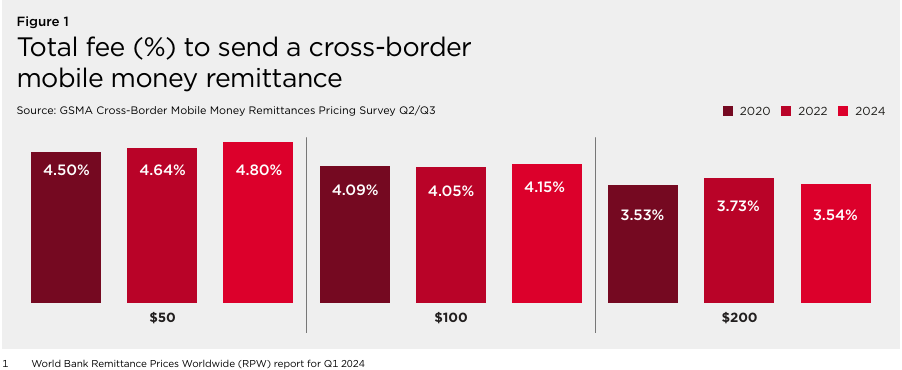
Cross-border mobile money remittance isn’t cheap. For instance, it cost at least $7 to send $200, approximately 3.54% of the transaction volume, in Q1 and Q2 2024.
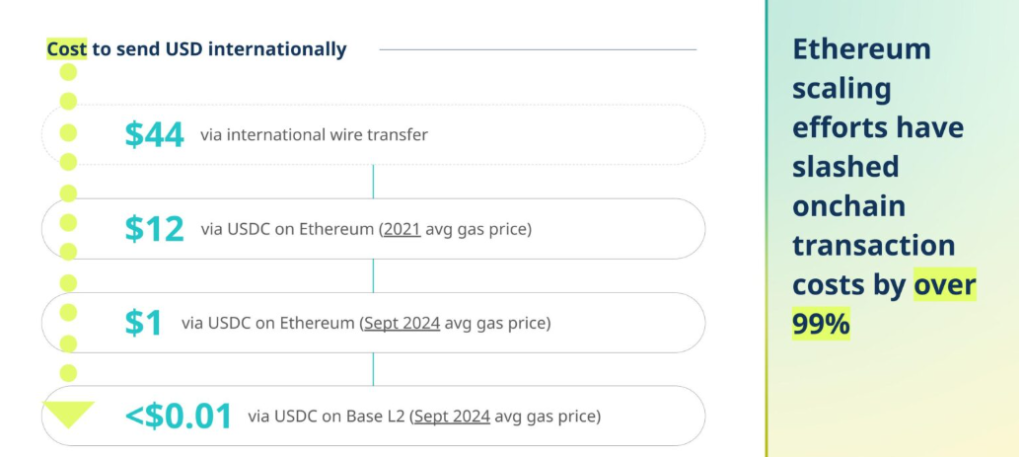
However, transactions involving stablecoins typically require lower fees. For example, it costs less than a fraction of a cent ($0.01) to send dollars through USDC, a dollar-pegged stablecoin, compared with $44 you’d pay to send the same USD via international wire transfer.
Nigeria’s digital currency, cNGN, is expected to reduce cross-border fees in Nigeria, potentially improving money inflow and access to international clients for businesses, freelancers, and creators.
2. Promote financial inclusion
The banked population in Nigeria increased from 51% in 2020 to 52% in 2023. Despite the growth of banking institutions, financial inclusion is still a worry. 1 in 4 adults in Nigeria is financially excluded, with rural communities likelier to be excluded from formal financial services.
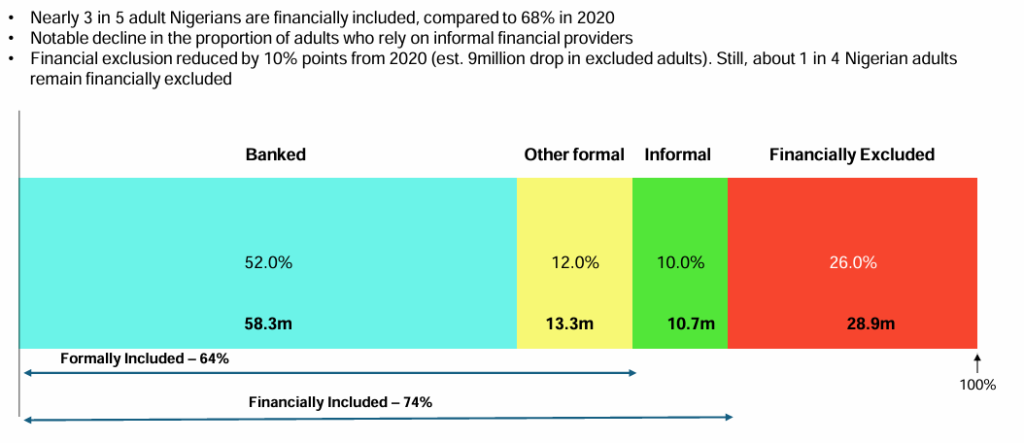
cNGN is expected to enhance financial access for young Nigerians who are underbanked or unbanked, regardless of their background, thanks to the simplicity of blockchain technology and the diminishing need for endless documentation. Additionally, the growth of smartphones among young Nigerians should strengthen cNGN adoption.
3. Act as a hedge against inflation
In February 2025, the headline and food inflation rates were 23.18% and 23.51%, respectively. As a result, Nigerians are turning to digital currencies for financial stability. That explains why over 9 in 10 Nigerians interested in cryptocurrencies did so for investment purposes in 2024.
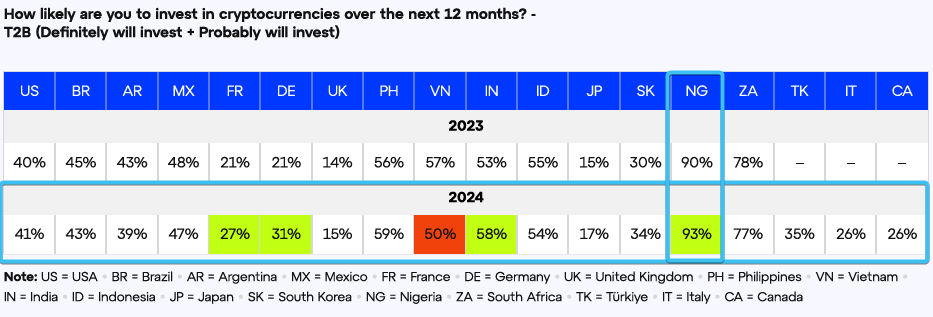
cNGN will expand the digital asset options for financial investments, savings, and a hedge against inflation.
Which network and crypto exchange support cNGN?
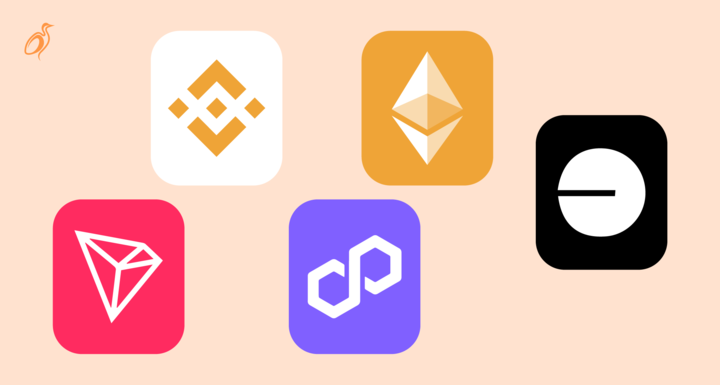
cNGN is available on the public blockchain. At the time of compilation, it supports the following networks:
- AssetChain
- Bantu (the primary cNGN blockchain issuer with at least 66 million balance)
- Base
- Binance
- Ethereum
- Polygon
- TRON
cNGN is listed on the following crypto platforms:
- Quidax
- Busha
Do traditional banks support cNGN?
Per TechPoint Africa’s release in December 2023, the following entities were scheduled for the execution phase of the cNGN project:
- Commercial banks like First Bank, Access Bank, Sterling Bank, and Providus Bank.
- Payment infrastructure, e.g., Kora (formerly Korapay), Interswitch, and Budpay
- Blockchain consultants, e.g., Interstellar and Convexity
Is cNGN a stablecoin or a cryptocurrency?
cNGN is a fiat-collaterised stablecoin whose value is pegged against the naira. Every stablecoin is a cryptocurrency, which is a digital currency built on a ledger-like, immutable blockchain to record transactions. Examples of cryptocurrencies include Bitcoin (BTC), Ethereum (ETH), Binance Coin (BNB), and Solana (SOL).
However, not every cryptocurrency is a stablecoin. While stablecoins and cryptocurrencies operate on the blockchain, the former is typically backed by another asset like fiat (e.g., naira and dollars) and gold to reduce the volatility associated with crypto assets.
So, yes, cNGN is a stablecoin—a form of cryptocurrency. Other examples of stablecoins include Tether USD (USDT), USD Coin (USDC), and Binance USD (BUSD).
Is eNaira the same as cNGN?
eNaira and cNGN are digital currencies built on the blockchain and pegged directly to the naira.
The eNaira is a Central Bank Digital Currency (CBDC)—a digital currency controlled by a national bank—issued, backed, and regulated by the Central Bank of Nigeria (CBN), making eNaira a digital currency with centralized authority, contrary to the decentralised principles of cryptocurrencies.
In contrast, SEC-compliant private entities (ASC and Wrapped CBDC Ltd.) developed cNGN on the public blockchain, making it a decentralised coin that can operate with multiple networks.
The table below summarises the similarities and differences between eNaira and cNGN
| Feature | eNaira | cNGN |
| Issuer | CBN | Private entities (ASC and Wrapped CBDC Ltd) |
| Nature of currency | CBDC | Naira-pegged stablecoin |
| Legal tender | Yes, backed by law and full sovereignty | No, but aims for regulatory compliance |
| Peg | 1:1 to the Nigerian Naira | 1:1 to the Nigerian Naira |
| Underlying technology | Private blockchain (Hyperledger Fabric) | Public blockchains (e.g., Bantu, Ethereum) |
| Control | Centrally controlled by the CBN | Decentralized, managed by private entities |
| Transparency | Less transparent due to private blockchain | More transparent due to public blockchains |
| Accessibility | Requires a government-linked eNaira wallet | Traded on crypto exchanges, accessible via wallets |
| Primary goal | Enhance payment efficiency, financial inclusion, and monetary policy effectiveness | Facilitate faster payments, cross-border transactions, and bridge traditional finance (TradFi) and DeFi |
| Regulation | Issued and regulated by the CBN | Regulated by the Securities and Exchange Commission (SEC) |
| Interoperability | Primarily within the eNaira ecosystem. | Interoperable with multiple blockchain networks |
cNGN vs USDC vs USDT: A comparison table

cNGN, USDC, and USDT are fiat-backed stablecoins. Here’s how they compare:
| Feature | USDC (USD Coin) | USDT (Tether) | cNGN (Compliant Naira) |
| Peg | 1:1 to the US Dollar | 1:1 to the US Dollar | 1:1 to the Nigerian Naira |
| Issuer | Centre Consortium (Circle & Coinbase) | Tether Limited | ASC and Wrapped CBDC Ltd |
| Nature | Pegged to the USD | Pegged to the USD | Pegged to the naira |
| Legal Tender | No | No | No, but aims for regulatory compliance |
| Underlying Technology | Primarily Ethereum, also on other blockchains | Multiple blockchains (Ethereum, Tron, etc.) | Multiple blockchains (Bantu, Polygon, Tron, etc.) |
| Control | Decentralized, managed by a consortium | Decentralized, managed by a private company | Decentralized, managed by private entities |
| Regulation | Strong focus on regulatory compliance in the US | Operates in a more “grey” regulatory zone | Regulated by the Nigerian SEC |
| Adoption | Widely adopted, growing institutional interest | Most widely traded stablecoin, high liquidity | Early stages of adoption in Nigeria |
| Reserve Backing | Primarily cash and short-term US government bonds | Mix of assets (cash, equivalents, loans, etc.) | Naira held in commercial bank reserves |
| Use Cases | DeFi, institutional trading, compliant transfers | Crypto trading, remittances, cross-border transfers | Digital payments in Nigeria, DeFi applications |
FAQs about cNGN
1. How many cNGN are in circulation?
As of February 5, 2025, 4,400 cNGN coins were held across six networks, including Bantu—the largest cNGN custodian.
2. Is cNGN secure?
The cNGN is a naira-backed stablecoin issued and controlled by SEC-compliant Wrapped CBDC and licenced crypto exchanges like Busha and Quidax. In this sense, the cNGN is a secure digital asset governed by the relevant financial regulators.
3. Does Crane support cNGN?
At the time of writing, Crane doesn’t support cNGN.
4. Is cNGN stable given it’s pegged directly to an unstable naira?
The naira was one of the worst-performing currencies in 2024, losing over 35% of its value. Your skepticism about the stability of cNGN, a stablecoin held directly to the naira, is as natural as the cloud hanging in the sky.
But blockchain experts’ consensus is that the enormous reserve in regulated financial institutions is sufficient to make it a stable digital currency averse to the volatile crypto market. The primary goal of the cNGN is to bridge the gap between traditional finance (TradFi) and decentralised finance (DeFi), improve financial accessibility, and reduce transaction costs.
5. Does the government regulate cNGN?
Unlike the eNaira, the government didn’t launch cNGN; therefore, it’s not a CBDC under the direct purview of the government. Instead, SEC-compliant private entities manage Nigeria’s stablecoin, ensuring it has strict regulatory oversight.